Meet the Rosette de Lyon the queen of French charcuterie. Produced in and around France’s gastronomic capital, this large, refined dry sausage is one of the most celebrated and distinctive charcuterie products in the country, beloved by connoisseurs for its elegant flavor, silky texture, and unmistakable appearance.
Yet outside of France and even outside of Lyon , the Rosette remains surprisingly little known. In this complete guide,I takes you deep into the world of Rosette de Lyon, its history, its production, its remarkable taste profile, and exactly how to enjoy it.
What is Rosette de Lyon?
Rosette de Lyon is a large, dry-cured pork sausage produced in the Lyon region of eastern France. It holds an IGP (Indication Géographique Protégée) label guaranteeing its geographical origin and traditional production method.
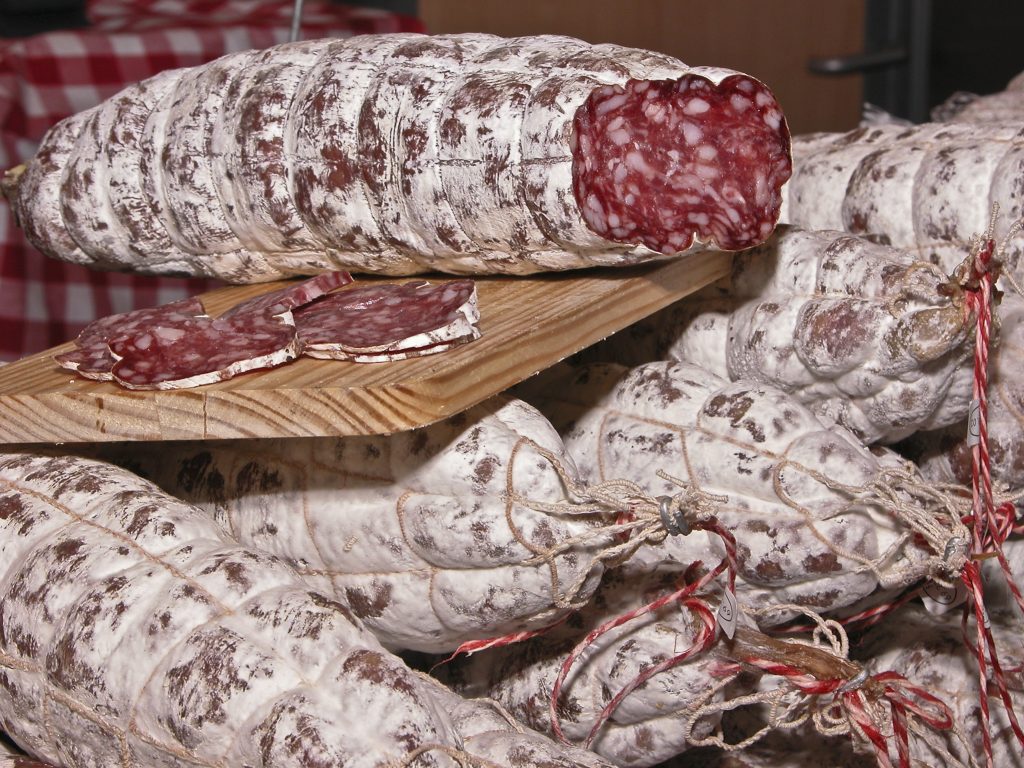
What immediately sets the Rosette apart from standard saucisson sec is its size and its casing. While a typical saucisson sec is stuffed into the small intestine and weighs 200-400g, Rosette de Lyon is stuffed into the pig’s caecum the large intestinal pouch at the junction of the small and large intestine , giving it its characteristic large, bulbous shape and weight of 500g to 2kg.
The name ‘Rosette’ refers to the rosette-shaped knot of string used to tie the wide end of the sausage — a distinctive finishing touch that makes the Rosette instantly recognizable.
Lyon: The Gastronomic Capital of France
To understand Rosette de Lyon, you first need to understand Lyon. The city has been considered the gastronomic capital of France for centuries a title it defends with fierce pride against all rivals, including Paris.
Lyon’s culinary culture is rooted in the bouchon the traditional Lyonnais bistro that has served generous, honest, pork-centric cuisine for generations. In these intimate restaurants, charcuterie is not a side note but a central pillar of the menu — and the Rosette is its crown jewel.
The city’s famous covered market, Les Halles de Lyon Paul Bocuse, named after the legendary chef who called Lyon home, is the best single destination in the world to discover Rosette de Lyon in all its glory alongside the city’s other great charcuterie treasures.
A Brief History of Rosette de Lyon
The tradition of making large, long-aged dry sausages in the Lyon region dates back several centuries. Lyon’s position at the crossroads of trade routes between northern and southern Europe meant it had access to the finest pigs, spices, and salt — creating ideal conditions for an exceptional charcuterie tradition to develop.
The Rosette as we know it today became firmly established in the 19th century, when Lyon’s legendary mères lyonnaises ,the remarkable women chefs who defined the city’s culinary identity , made it a fixture of their menus. By the early 20th century, it had become Lyon’s signature charcuterie product.
Today, the Rosette de Lyon IGP protects this tradition, ensuring that only sausages produced according to strict specifications in the Lyon region can carry the name.
How Rosette de Lyon is Made
The production of Rosette de Lyon follows a rigorous traditional process that distinguishes it clearly from standard saucisson sec.
The Meat
Rosette de Lyon is made exclusively from pork typically a blend of lean shoulder or leg meat and back fat. The meat is ground more finely than standard saucisson sec, giving the finished product its characteristic smooth, almost silky texture when sliced. The fat content is carefully balanced at around 25-30% to ensure richness without greasiness.
The Seasoning
The curing mix for Rosette de Lyon is deliberately restrained ,allowing the quality of the pork to speak for itself. The essential seasonings are salt, black pepper, and a carefully measured amount of white wine (traditionally from the nearby Beaujolais or Côtes du Rhône appellations). Some producers add a touch of garlic, nutmeg, or sugar. No artificial preservatives, colorings, or flavor enhancers are permitted under the IGP specifications.
The Casing — What Makes Rosette Unique
This is the defining characteristic of Rosette de Lyon. The seasoned meat mixture is tightly packed into the pig’s caecum a natural, thick-walled intestinal pouch that is far larger and more robust than the small intestine used for standard saucisson sec.
This thick natural casing has three important effects on the final product:
- It forces a much longer, slower drying process ,because moisture must travel much further to escape through the thick casing wall.
- It creates a natural microclimate inside the sausage, allowing flavor development through enzymatic activity over many months.
- It gives the Rosette its characteristic large, irregular, slightly tapered shape unmistakable in any charcuterie display.
The Tying
Once stuffed, the Rosette is tied at both ends with string the wide end with the distinctive rosette knot that gives the sausage its name, and the narrow end with a simple tie. The string is then wound in a spiral pattern around the entire length of the sausage, helping it maintain its shape during the long drying process.
The Drying
Rosette de Lyon undergoes a minimum of 3 months of drying and often 4 to 6 months for premium versions. This extended aging is what separates the Rosette from ordinary saucisson sec and is the primary reason for its superior flavor complexity.
During this time, the characteristic white penicillium mold bloom develops on the surface of the casing, slowing moisture loss and contributing to the Rosette’s complex, slightly earthy aromatic profile.
What Does Rosette de Lyon Taste Like?
Tasting a properly aged Rosette de Lyon for the first time is a revelation for anyone accustomed to standard saucisson sec. The experience is fundamentally different , more refined, more complex, and more memorable.
- Flavor: deep, complex pork flavor with subtle notes of Beaujolais wine, black pepper, and a gentle earthiness from the aging. Far more nuanced than standard saucisson.
- Texture: smooth and almost silky on the palate , the finer grind and longer aging create a melt-in-the-mouth quality that sets it apart from the grainier texture of standard saucisson sec.
- Finish: long and satisfying, with a pleasant saltiness that lingers without being overpowering.
- Aroma: complex and enticing , notes of cured pork, spice, wine, and the subtle earthiness of the aged casing.
- Appearance: deep rose-pink interior with fine, even white fat distribution and a thick, mold-coated exterior casing.
My note: the first time I tasted a 5-month aged Rosette from Les Halles de Lyon, I understood immediately why Lyonnais food lovers are so fiercely proud of their charcuterie tradition. It is simply in a different category from what you find in supermarkets.
Rosette de Lyon vs Jésus de Lyon: What’s the Difference?
Visitors to Lyon often encounter both Rosette and Jésus de Lyon and wonder how they differ. Both are large Lyonnais dry sausages with IGP status, but they have distinct characteristics:
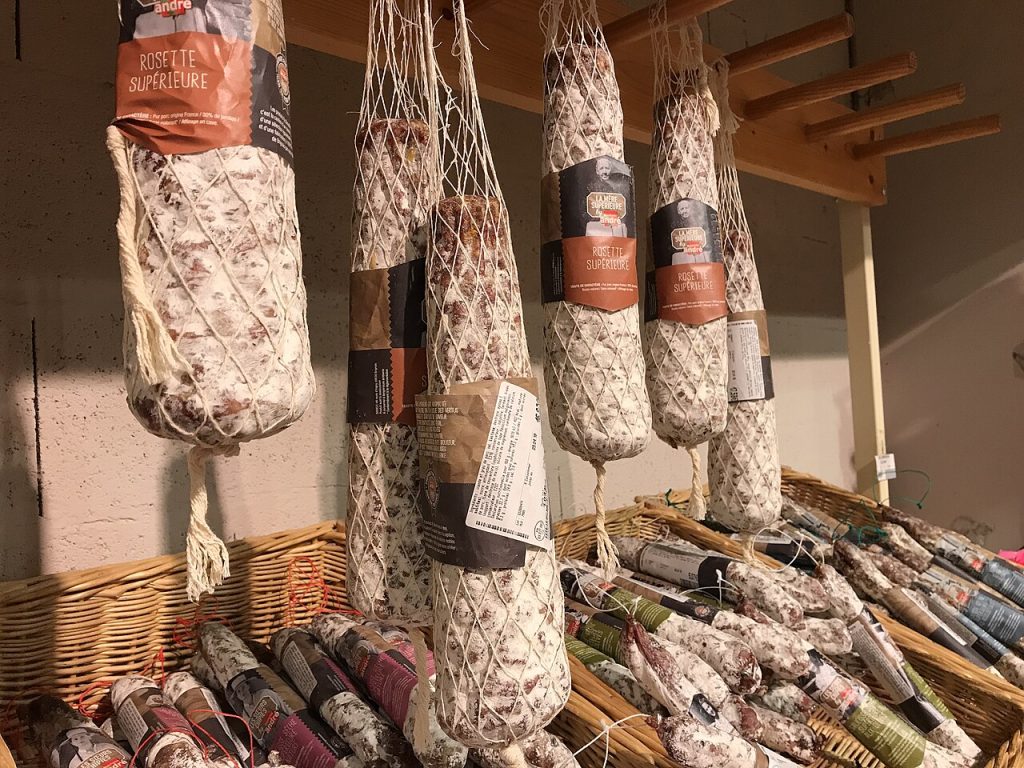
- Casing: Rosette uses the pig’s caecum; Jésus uses the large intestine (chaudin) , giving Jésus its wider, more barrel-shaped form.
- Size: Rosette is typically longer and more tapered; Jésus is shorter and fatter.
- Texture: Rosette has a slightly finer grind and smoother texture; Jésus tends to be coarser and more rustic.
- Flavor: Rosette is more refined and elegant; Jésus is bolder, more intensely flavored.
- Aging: Both require a minimum of 3 months, but Jésus is often consumed slightly younger and fresher than Rosette.
- Occasion: Rosette is the everyday luxury; Jésus is traditionally associated with festive occasions , its name allegedly refers to its swaddled appearance when hanging to dry.
How to Enjoy Rosette de Lyon
Serving:
- Always serve at room temperature remove from the fridge at least 20 minutes before eating.
- Slice thinly thinner than standard saucisson, around 2-3mm. The smooth texture of Rosette benefits from thinner slicing.
- Remove the casing , the thick caecum casing is not eaten. Score and peel it back as you slice.
- Fan the slices on a board the elegant, marbled appearance of Rosette deserves to be shown off.
The classic Lyonnais accompaniments:
- Fresh baguette or country bread , always .
- Salted butter the Lyon way: a thin spread on the bread before the Rosette.
- Cornichons ,essential to balance the richness.
- Dijon mustard , a small pot on the side.
- A glass of Beaujolais, the natural pairing from Lyon’s neighbouring wine region. A Morgon or Fleurie is ideal.
Where to Buy Rosette de Lyon
- Les Halles de Lyon Paul Bocuse — the ultimate destination. Several charcutiers here produce exceptional Rosette de Lyon using traditional methods. An unmissable stop for any food lover visiting Lyon.
- Lyon’s bouchons and restaurants — Rosette is a fixture on the charcuterie plate (assiette lyonnaise) in any traditional bouchon.
- French supermarkets — pre-sliced Rosette de Lyon IGP is widely available in French supermarkets. Quality varies, but major brands maintain good standards.
- Online specialty retailers — several French food importers now ship authentic Rosette de Lyon internationally. Search for ‘Rosette de Lyon IGP’ to find certified producers.
- French delicatessens abroad — in major cities with a significant French community, specialty food shops often carry whole Rosette de Lyon.
Frequently Asked Questions
Is Rosette de Lyon the same as saucisson sec?
Rosette de Lyon is a type of saucisson sec — but a very specific and superior one. The key differences are its larger size, its unique caecum casing, its finer grind, its minimum 3-month aging, and its IGP geographical protection. Think of it as the premium, long-aged version of saucisson sec.
How long does Rosette de Lyon keep?
A whole, uncut Rosette de Lyon in its casing will keep for several weeks to months in a cool, dry, well-ventilated place. Once cut, wrap the cut end in wax paper and refrigerate. Consume within 1-2 weeks for best flavor. The drier the storage environment, the longer it keeps.
Why is Rosette de Lyon more expensive than standard saucisson sec?
Three main reasons: the larger, more expensive natural casing (pig’s caecum), the longer minimum aging period of at least 3 months (vs 4 weeks for basic saucisson), and the IGP certification requirements that mandate specific production methods and geographical origin. A properly aged artisan Rosette represents months of skilled, attentive work — the price reflects that.
Final Thoughts
Rosette de Lyon is one of those products that rewards those willing to seek it out and pay for quality. In a world of mass-produced charcuterie, it stands as a reminder of what French artisan tradition is capable of — and why Lyon has earned its reputation as the gastronomic capital of France.
If you ever find yourself in Lyon, make Les Halles de Lyon Paul Bocuse your first stop. Ask for a slice of properly aged Rosette, a glass of Beaujolais, and take a moment to appreciate one of France’s finest charcuterie creations. You won’t regret it.