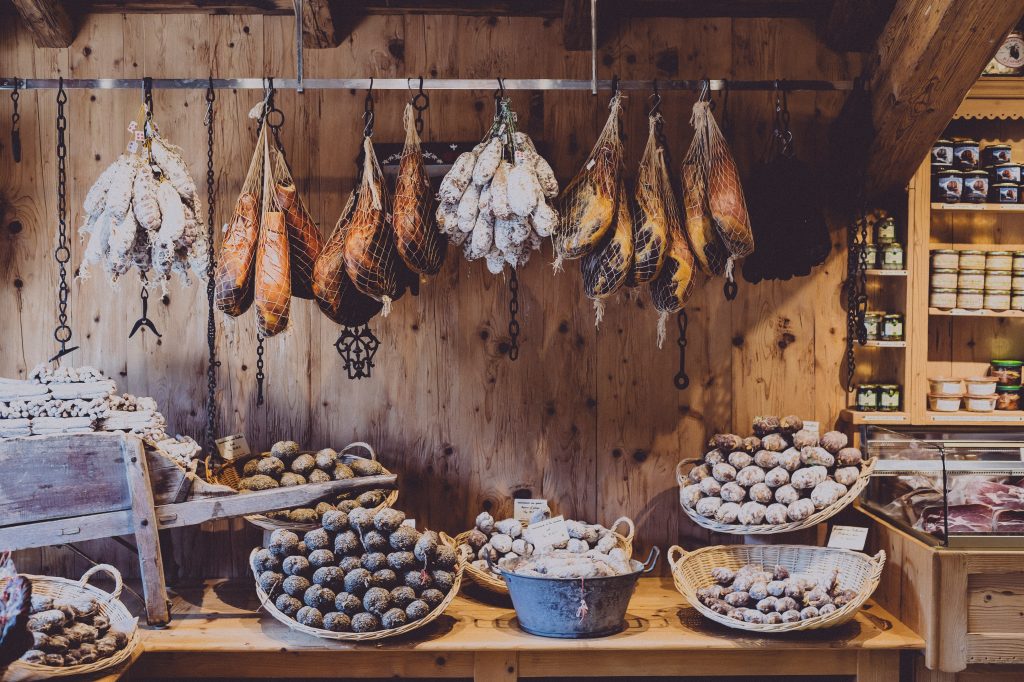
If you’ve ever wandered through a French market and found yourself staring at rows of golden terrines, plump saucissons, and silky-smooth rillettes — you’ve already met French charcuterie. But what exactly is it, and why do food lovers around the world can’t get enough of it?
In this complete guide, we’ll walk you through everything you need to know about French charcuterie: its history, its most iconic products, how it’s made, and how to enjoy it at home like a true Frenchman.
What Exactly is French Charcuterie?
The word charcuterie comes from the French words chair (flesh) and cuit (cooked). Traditionally, it referred to the art of preparing and preserving pork — but today, the term covers a wide range of cured, smoked, salted, and cooked meats, as well as terrines, pâtés, and sausages.
French charcuterie is not just food — it’s a centuries-old craft, a cultural institution, and one of the great prides of French gastronomy. It’s officially recognized as part of France’s cultural heritage.
A Brief History of French Charcuterie
Charcuterie in France dates back to ancient times, but it truly flourished during the Middle Ages. In 15th-century Paris, the first guild of charcutiers (charcuterie artisans) was officially recognized, giving them the exclusive right to sell cooked pork products.
Before refrigeration, salting, smoking, and curing meats were essential survival techniques. Over centuries, these necessity-driven methods evolved into a sophisticated culinary art — each French region developing its own specialties and secrets.
The Most Iconic French Charcuterie Products
France produces hundreds of different charcuterie products. Here are the most beloved ones you absolutely need to know:
🥩 Saucisson Sec — The French Salami
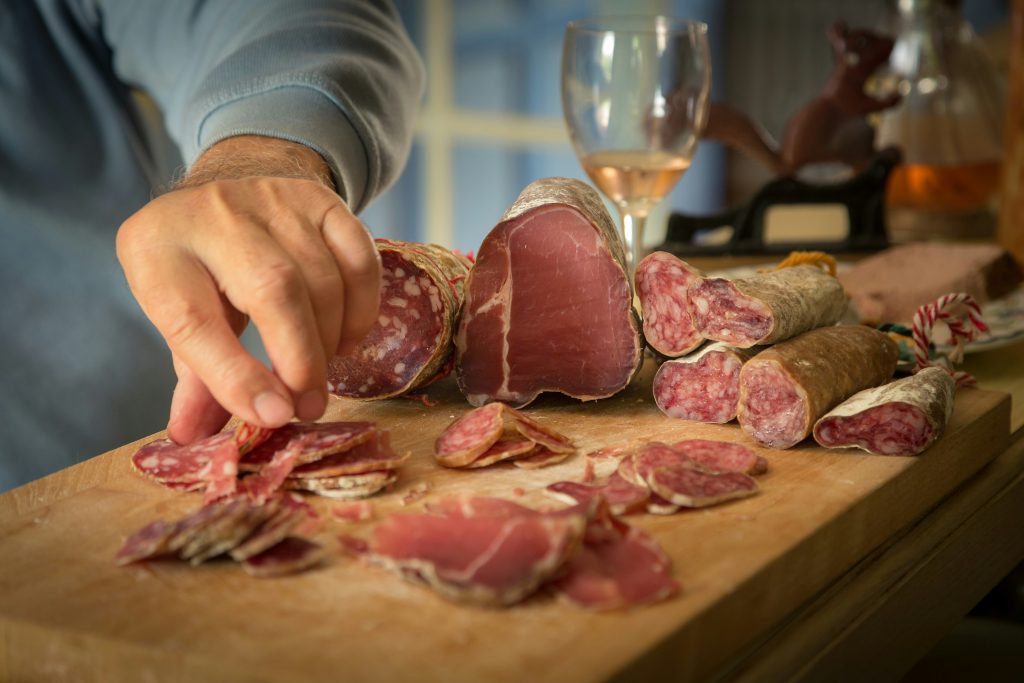
Saucisson sec is probably the most iconic French charcuterie product. It’s a dry-cured sausage, typically made from pork, seasoned with salt, pepper, and spices, then aged for several weeks. Its firm texture and deep, complex flavor make it a staple on every French apéritif board. Slice it thick, pair it with a crusty baguette and a glass of red wine — perfection.
🍖 Jambon de Bayonne — France’s Most Famous Ham
Jambon de Bayonne is France’s answer to Prosciutto di Parma — a dry-cured ham from the Basque region, with a Protected Geographical Indication (PGI) label. The pigs are raised in southwest France, and the ham is cured with Salies-de-Béarn salt for a minimum of seven months. The result is a delicate, melt-in-your-mouth ham with a mild, slightly sweet flavor.
🫙 Rillettes de Tours — The Spreadable Wonder
Rillettes are a specialty of the Loire Valley — and particularly of Tours and Le Mans. Pork is slow-cooked for hours in its own fat until it becomes tender enough to be shredded and mixed into a rich, spreadable paste. Spread on toasted bread, rillettes are the ultimate French comfort food.
🧡 Pâté — The Art of the Terrine
Pâté is a smooth or coarse mixture of ground meat (pork, liver, duck, rabbit…) blended with fat, herbs, and spices, then baked in a terrine mold. Pâté de campagne (country pâté) is the most popular everyday version, while pâté en croûte — wrapped in pastry — is considered a high-art version of the dish.
🌭 Andouillette — The Bold Choice
Not for the faint-hearted! Andouillette is a coarse-grained sausage made from pork intestines, with a very strong, pungent flavor. It’s deeply loved in France — especially in Lyon and Troyes — and completely polarizing for newcomers. Grilled and served with mustard, it’s an authentic taste of old-school French charcuterie.
How is French Charcuterie Made?
The main techniques used in French charcuterie are:
- Salting and dry-curing: salt draws out moisture, inhibiting bacterial growth and concentrating flavors (used for saucisson, jambon de Bayonne).
- Smoking: cold or hot smoking adds flavor and acts as a preservative (used for some sausages and hams).
- Slow cooking in fat (confit): meat is cooked and preserved in its own fat (used for rillettes, duck confit).
- Grinding and emulsifying: meat is ground, mixed with fat and spices, then shaped and baked or air-dried (used for pâtés, terrines, sausages).
French Charcuterie by Region
One of the great joys of French charcuterie is its regional diversity. Every corner of France has its own local specialties:
- Loire Valley: Rillettes de Tours, rillettes du Mans, andouillettes de Vouvray.
- Basque Country: Jambon de Bayonne, chorizo basque, piperade sausages.
- Auvergne: Saucisson d’Auvergne, tripoux, le Pounti.
- Alsace: Saucisse de Strasbourg, fleishkaechle, Presskopf.
- Lyon: Rosette de Lyon, Jésus de Lyon, quenelles de brochet.
How to Enjoy French Charcuterie at Home
The most classic way to enjoy French charcuterie is during an apéritif — a relaxed pre-dinner moment with friends and family. Here’s how to build the perfect French charcuterie board:
- Choose 3 to 4 different products: a saucisson, a slice of pâté, some rillettes, and a thin slice of jambon.
- Add some French cornichons (small pickles) — they cut through the richness perfectly.
- Serve with a fresh baguette or sourdough bread, sliced not too thin.
- Add a glass of red wine: Beaujolais, Côtes du Rhône, or a Chinon from the Loire Valley pair beautifully.
- Serve at room temperature — never straight from the fridge — to bring out the full flavor.
Frequently Asked Questions
Is French charcuterie safe to eat?
Yes. French charcuterie products sold in shops are made under strict European food safety standards. Traditional curing methods (salt, acidity, drying) are highly effective at preventing bacterial growth. As with all cured meats, moderate consumption is recommended.
Where can I buy authentic French charcuterie?
In France, you’ll find it at any charcutier (specialist shop), market, or supermarket. Outside France, specialty food stores, French delicatessens, and online shops now ship authentic French cured meats worldwide. We’ll be reviewing the best options in a future article!
What is the difference between charcuterie and deli meats?
Deli meats are typically industrially produced, sliced, and packaged for convenience. French charcuterie, at its best, is an artisanal product — made with care, quality ingredients, and time-honored techniques. The flavor difference is significant.
Final Thoughts
French charcuterie is much more than a snack — it’s a gateway into French culture, history, and the art of savoring life slowly. Whether you’re slicing a saucisson at an apéritif, spreading rillettes on a warm baguette, or discovering the bold taste of andouillette for the first time, every bite tells a story.
On frenchcuredmeats.com, we’ll be your guide through the wonderful world of French cured meats — one product, one region, one recipe at a time. Stay tuned for more!