France is home to some of the world’s finest cured meats — a living tradition that spans centuries, regions, and flavors. But with so many products to discover, where do you even start?
Whether you’re planning a trip to France, building the ultimate charcuterie board, or simply curious about what lies beyond salami and prosciutto — this list is for you. Here are the 10 French cured meats you absolutely need to try, and exactly where to find them.
1. Saucisson Sec — The Undisputed King
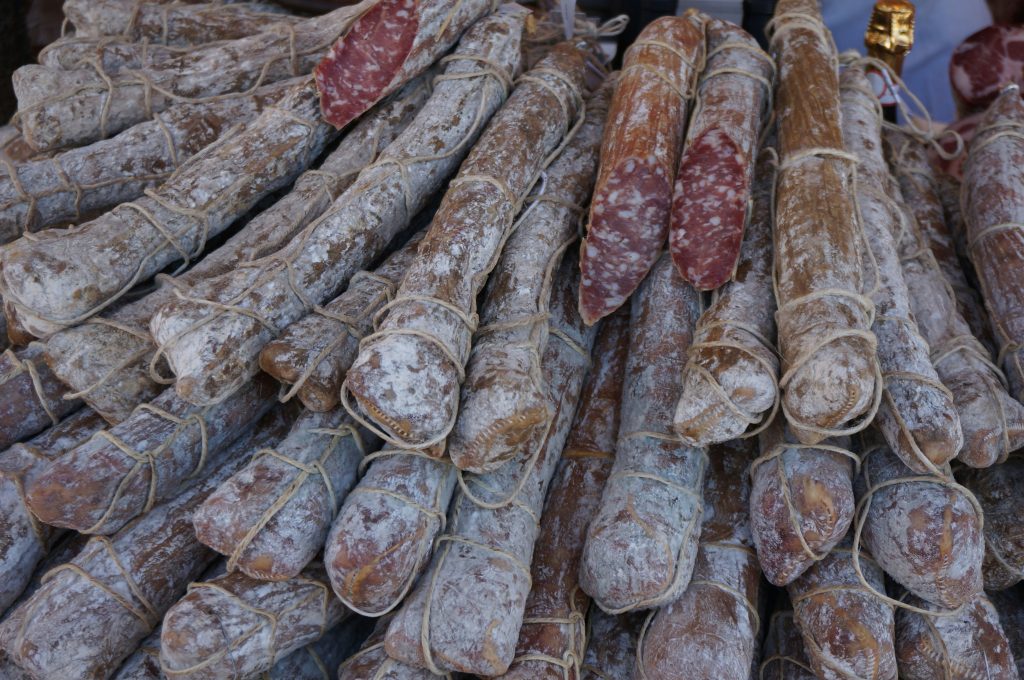
If there’s one French cured meat that defines charcuterie culture, it’s the saucisson sec. This dry-cured pork sausage is found in every French home, every market stall, and every good apéritif spread.
Made from coarsely ground pork mixed with salt, pepper, and sometimes garlic or red wine, the saucisson is stuffed into a natural casing and left to dry-cure for several weeks. The result is a firm, deeply savory sausage with a white mold rind that locks in flavor.
How to enjoy it: Slice thickly, serve at room temperature with a baguette and cornichons.
Where to find it: Every French supermarket, market, and charcutier. Outside France, look in French specialty delis or online.
2. Jambon de Bayonne — France’s Finest Ham
Jambon de Bayonne is France’s most celebrated dry-cured ham — and one of the finest in the world. Produced in the Basque region of southwest France, it holds a Protected Geographical Indication (PGI), meaning it can only be made with pigs raised and cured in that specific area.
The pigs are fed on a diet of corn and chestnuts, then the hams are rubbed with salt from the legendary Salies-de-Béarn salt springs and aged for a minimum of 7 months. The result is a silky, delicately flavored ham with a beautiful rosy color.
How to enjoy it: Serve paper-thin, draped over sliced melon or simply on bread with butter.
Where to find it: French supermarkets, Basque specialty shops, and online retailers worldwide.
3. Rillettes de Tours — The Spreadable Treasure
Rillettes are one of the great hidden gems of French charcuterie. Originating from the Loire Valley — and especially from Tours — rillettes are made by slow-cooking pork in its own fat for hours, then shredding and seasoning the meat into a rich, spreadable paste.
Unlike pâté, which is smooth and uniform, rillettes are rustic and textured. They’re deeply savory, incredibly rich, and utterly addictive — especially when spread generously on warm toasted bread.
How to enjoy it: Spread on toasted sourdough or a baguette. Add a small dollop of Dijon mustard on the side.
Where to find it: Local markets in the Loire Valley, French supermarkets, and gourmet online shops.
4. Rosette de Lyon — The Jewel of Lyon
Lyon is considered the capital of French gastronomy — and the Rosette is its most prized charcuterie. This large, dry-cured pork sausage is encased in the pig’s bladder (giving it its distinctive rounded shape) and aged for several months.
Rosette has a finer texture than saucisson sec, a subtle wine-infused flavor, and an incredibly long shelf life. It’s one of the most refined examples of French sausage-making.
How to enjoy it: Sliced thin, on a wooden board alongside a glass of Beaujolais.
Where to find it: Lyon’s famous covered markets (Les Halles de Lyon), specialty shops, and online.
5. Pâté de Campagne — Rustic and Irresistible
Pâté de campagne (country pâté) is the everyday hero of French charcuterie. Made from coarsely ground pork, liver, herbs, and spices — then baked in a terrine mold — it’s hearty, flavorful, and deeply satisfying.
Every French family has a preferred version, and every charcutier has their secret recipe. Some add cognac, others use duck liver, and some incorporate green peppercorns or thyme.
How to enjoy it: Thick slices on toasted bread with cornichons and a smear of wholegrain mustard.
Where to find it: Every French supermarket and charcutier. One of the easiest French cured meats to find internationally.
6. Coppa — The Elegant Neck
Though often associated with Italy, coppa has a strong French tradition, particularly in Corsica and Alsace. Made from the neck or shoulder of the pig, it’s cured with salt and spices, then aged in a natural casing for 2 to 6 months.
French coppa tends to be more subtly spiced than its Italian counterpart — with a beautiful marbling of fat and a melt-in-your-mouth texture.
How to enjoy it: Sliced paper-thin on a charcuterie board alongside olives and aged cheese.
Where to find it: Corsican specialty shops, Alsatian markets, and upscale French delicatessens.
7. Boudin Noir — The Black Sausage
Boudin noir is France’s beloved blood sausage — made from pork blood, fat, onions, and spices, then cooked in a casing. It’s one of the oldest charcuterie products in France, with roots going back to ancient times.
Don’t be put off by the name — boudin noir has a rich, slightly sweet, deeply savory flavor that pairs beautifully with sautéed apples and mashed potatoes. It’s a classic French bistro dish.
How to enjoy it: Pan-fried until crispy, served with caramelized apples and creamy mashed potatoes.
Where to find it: French butchers, supermarkets, and traditional bistros across France.
8. Jésus de Lyon — The Festive Sausage
The Jésus de Lyon is a large, coarse-ground pork sausage — a close cousin of the Rosette, but typically smaller and consumed fresher. Its name allegedly comes from its swaddled appearance when hung to dry.
It’s made exclusively from pigs raised in the Rhône-Alpes region, seasoned with white wine, garlic, and black pepper. The Jésus has a more intense flavor than standard saucisson — it’s a true Lyonnaise delicacy.
How to enjoy it: Sliced thickly at room temperature, paired with a glass of Côtes du Rhône.
Where to find it: Les Halles de Lyon Paul Bocuse, Lyon specialty shops, and gourmet online retailers.
9. Magret de Canard Séché — Dried Duck Breast
For something a little different, magret de canard séché (dried duck breast) is a revelation. Popular in the Périgord and Gascony regions of southwest France, it’s made from the breast of force-fed ducks — the same ducks used for foie gras production.
The breast is salted, seasoned with herbs and black pepper, then dried for several weeks. The result is a rich, tender, deeply flavored meat with a beautiful fat cap — elegant and indulgent.
How to enjoy it: Sliced thin on a board, or warm in a salad with walnuts and duck fat croutons.
Where to find it: Southwest France markets, gourmet food shops, and specialty online retailers.
10. Andouille de Vire — The Bold Norman Sausage
Andouille de Vire is a smoked sausage from Normandy, made from pig’s stomach and intestines, rolled and smoked over beechwood for weeks. It has a distinctive dark brown exterior, a firm texture, and a powerful, complex flavor.
It’s not for the timid — but for adventurous food lovers, it’s a fascinating piece of French culinary heritage. Sliced cold or lightly warmed, it’s a conversation-starter at any charcuterie board.
How to enjoy it: Sliced cold as part of a board, or lightly pan-fried with Normandy cider.
Where to find it: Norman markets and specialty shops, particularly around Vire in Calvados.
Tips for Buying French Cured Meats
Whether you’re shopping in France or abroad, keep these tips in mind:
- Always buy from a proper charcutier when in France — the quality difference vs. supermarkets is significant.
- Look for AOP or PGI labels — these guarantee authentic origin and production methods.
- Ask for a taste before buying at a market — any good vendor will happily offer one.
- Store properly: dry-cured whole sausages keep for weeks in a cool, dry place; once sliced, refrigerate and consume within a few days.
- Serve at room temperature — never straight from the fridge. Cold kills the flavor.
Final Thoughts
French cured meats are one of the great pleasures of French food culture — and exploring them is a delicious journey through history, region, and tradition. Whether you start with the familiar saucisson sec or dive straight into the bold world of andouille, every product tells a story about the land and the people who made it.
On frenchcuredmeats.com, we’ll be diving deep into each of these products in the weeks to come — with recipes, guides, and tips for sourcing the best French cured meats wherever you are in the world.