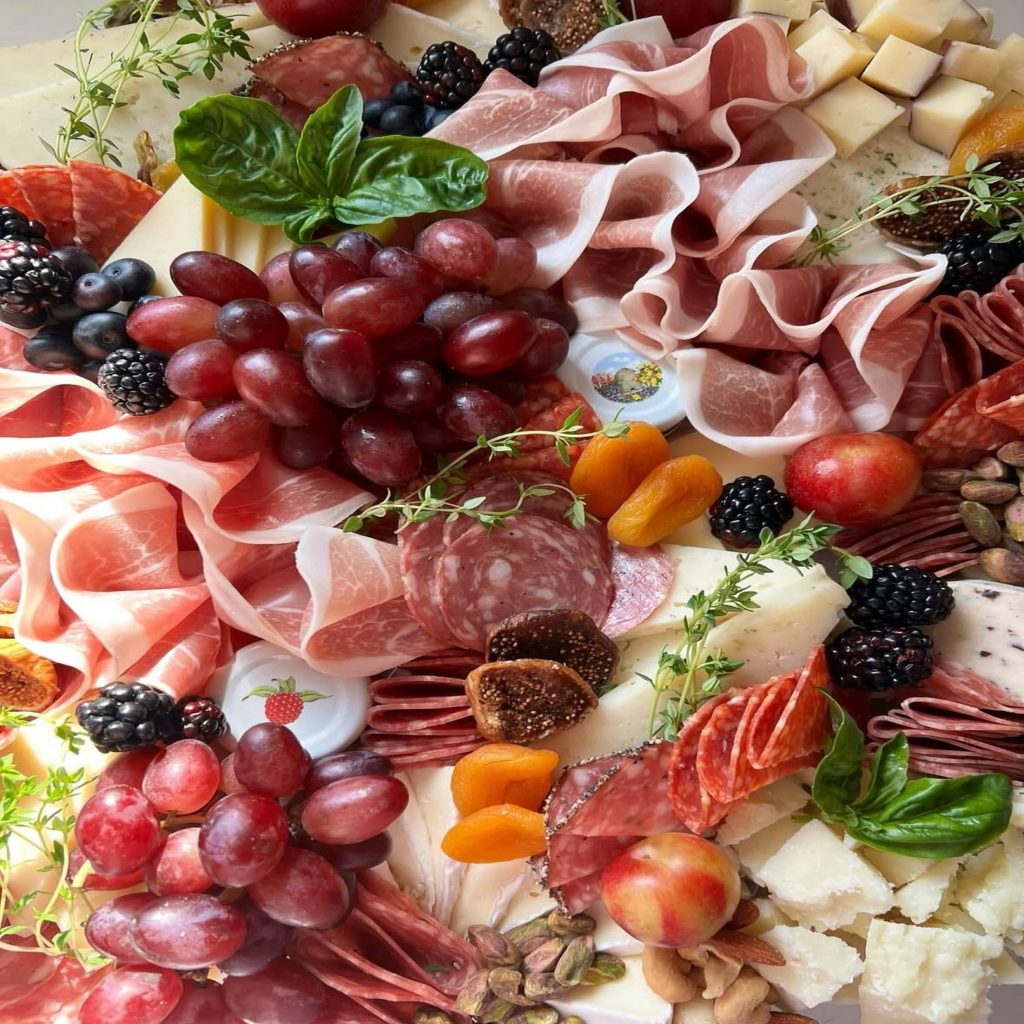
There is nothing quite like a French charcuterie board to turn any occasion into a celebration. Whether you’re hosting a dinner party, planning a relaxed apéritif with friends, or simply treating yourself to a beautiful evening at home — a well-crafted board of French cured meats, cheeses, and accompaniments is guaranteed to impress.
The good news? You don’t need to be a professional French charcutier to pull it off !! With the right ingredients, a little know-how, and a few presentation tricks, you can create a stunning French charcuterie board at home that looks like it came straight from a Parisian deli.
In this guide, I’ll walk you through everything — from choosing the right meats to the perfect accompaniments, and from assembling the board to serving it like a true Frenchman.
What is a French Charcuterie Board?
A French charcuterie board — or “planche de charcuterie” — is a curated selection of cured meats, often accompanied by cheese, bread, pickles, fruits, and condiments, arranged beautifully on a wooden board or slate.
In France, the charcuterie board is most often served as part of the “apéritif” — the beloved pre-dinner ritual where friends gather over a glass of wine before the meal. It’s convivial, generous, and deeply embedded in French food culture.
Step 1 — Choose Your French Cured Meats
The cured meats are the star of the show. For a classic French board, aim for 3 to 4 different products to offer variety without overwhelming your guests. Here are the best options:
The Classics (always include at least one):
- Saucisson sec — the undisputed king of French charcuterie. Slice it thick and arrange it in a fan.
- Jambon de Bayonne — paper-thin slices of delicate dry-cured ham. Fold them loosely for elegance.
- Rillettes de Tours — served in a small pot or jar with a butter knife for spreading.
- Pâté de campagne — sliced thickly on the board alongside small cornichons.
For a more impressive board (optional additions):
- Rosette de Lyon — refined, wine-infused dry sausage from Lyon.
- Magret de canard séché — dried duck breast, incredibly rich and elegant.
- Coppa de Corse IGP — a delicate Corsican cured pork neck, air-dried in the mountain maquis, sliced paper-thin.
- Mousse de foie — smooth liver mousse, spreadable and indulgent.
Practical tip: Plan for about 80-100g of cured meats per person for an apéritif, or 150g per person if it’s the main event.
Step 2 — Add French Cheeses
A proper French board wouldn’t be complete without cheese. Choose 2 to 3 varieties with contrasting textures and flavors:
- A soft cheese: Brie de Meaux, Camembert de Normandie, or Coulommiers.
- A semi-hard cheese: Comté (aged 12 months is ideal), Cantal, or Tomme de Savoie.
- A goat cheese: Sainte-Maure-de-Touraine (a Loire Valley specialty!), Crottin de Chavignol, or Pélardon.
- A blue cheese (optional): Roquefort or Bleu d’Auvergne for the adventurous.
Important: always serve cheese at room temperature. Take it out of the fridge at least 30 minutes before serving — cold cheese loses most of its flavor.
Step 3 — Choose Your Accompaniments
The accompaniments are what elevate a good board into a great one. They add color, texture, acidity, and sweetness to balance the richness of the meats and cheeses.
Essential accompaniments:
- Cornichons (small French pickles) — the acidity cuts through the fat of the meats perfectly.
- Butter — a true French tradition: a thin spread of good quality salted or semi-salted butter (demi-sel) on a fresh baguette before laying the charcuterie on top. Do not skip this.
- Fresh baguette — sliced on an angle, or small toasted crostini for crunch.
- Sourdough or country bread — rustic and perfect for spreading rillettes.
- Dijon mustard — a classic French condiment, essential alongside pâté and saucisson.
Optional but recommended additions:
- Dried fruits: apricots, figs, or dates — sweetness contrasts beautifully with salty meats.
- Fresh grapes or sliced pears — light and refreshing between bites.
- Walnuts or hazelnuts — add crunch and pair wonderfully with cheese.
- Honey — a small pot of floral honey alongside the goat cheese is magical.
- Fig jam or onion confit — a French classic alongside pâté and rillettes.
Step 4 — Choose the Right Board
The board itself is part of the presentation. Here are the best options:
- Wooden cutting board — the most classic and versatile. Warm and rustic.
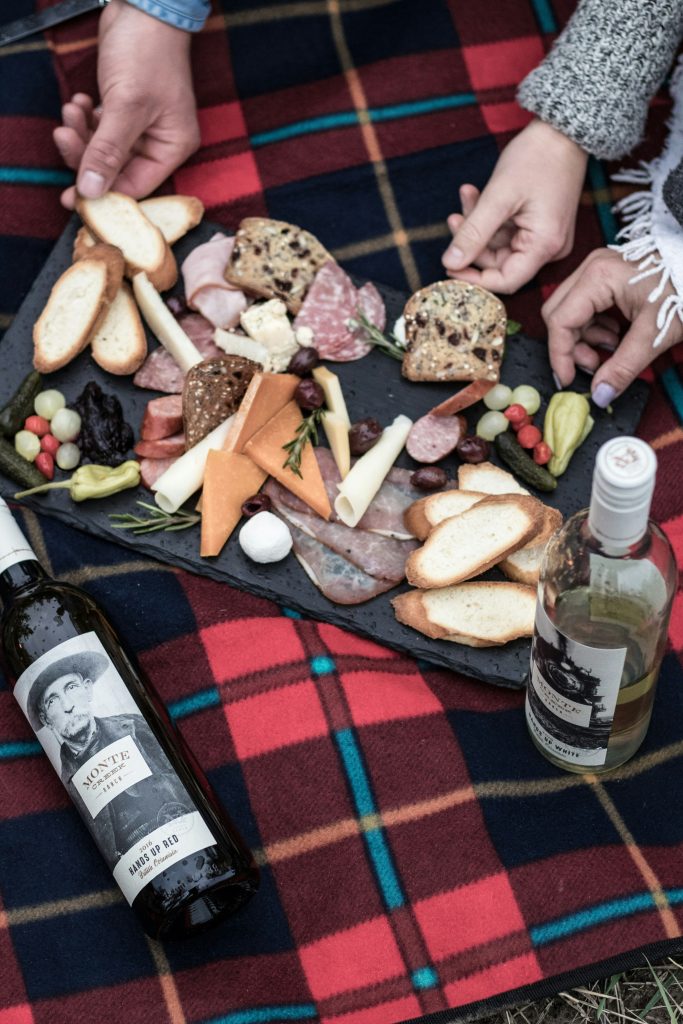
- Slate board — elegant and modern. You can write the names of the cheeses on it with chalk.
- Marble slab — beautiful and keeps everything cool, especially in summer.
- Large wooden tray or platter — perfect for bigger groups.
Size guide: a 30x40cm board is perfect for 4 people. For 6-8 people, go for at least 40x60cm, or use two boards.
Step 5 — Assemble Your Board Like a Pro
This is where magic happens. Follow these steps for a beautiful, professional-looking board:
- Start with the anchors: place your cheeses and small bowls (cornichons, mustard, honey) first. These are the biggest items that define the structure.
- Add the cured meats: fan out the saucisson slices, fold the jambon loosely, and arrange the coppa in overlapping circles.
- Fill the gaps: tuck in the fruits, nuts, and dried fruits between the meats and cheeses.
- Add the bread last: lean slices of baguette along the edge or in a separate basket.
- Garnish: a few sprigs of fresh rosemary or thyme add a beautiful, aromatic touch.
- Label your cheeses: small labels or chalk marks on a slate board help guests know what they’re tasting.
Step 6 — Choose the Perfect Wine Pairing
In France, a charcuterie board without wine is almost unthinkable. Here are the best pairings:
- Red wine: Beaujolais, Côtes du Rhône, or Chinon (Loire Valley) — light to medium reds pair perfectly with saucisson and pâté.
- White wine: Muscadet or Sancerre — crisp whites work beautifully with goat cheese and rillettes.
- Rosé: a dry Provence rosé is the ultimate all-rounder for a summer board.
- Non-alcoholic: sparkling water with lemon, or a good quality grape juice for non-drinkers.
My Pascal’s Top Tips for the Perfect French Charcuterie Board
- Always serve at room temperature — never straight from the fridge. Take everything out 30 minutes before serving.
Prepare in advance — you can assemble most of the board 30 minutes before guests arrive (except the bread)
- Odd numbers look better — 3 cheeses, 3 meats, 3 accompaniments. It’s a designer’s trick that works.
- Don’t overcrowd — a slightly sparse board looks more elegant than an overstuffed one.
- Use different heights — stack crackers, prop up cheese wedges, lean bread against other items.
- Buy from a proper charcutier when possible .And whenever you can, look for products carrying an AOC, AOP, or IGP label — these official certifications guarantee authentic origin and traditional production methods.
Check out our complete guide: French Food Labels Explained: AOC, AOP, IGP and more →
Final Thoughts
Building a French charcuterie board is one of the most enjoyable things you can do in the kitchen — and one of the most rewarding. Once you’ve mastered the basics, you’ll find yourself creating new combinations every time, discovering new products, and sharing the joy of French food culture with everyone around your table.