Two nations, two legendary hams, one delicious rivalry. Jambon de Bayonne from France and Prosciutto di Parma from Italy are arguably the two finest dry-cured hams in the world — and food lovers have been comparing them for decades.
Both are beautiful products with centuries of tradition behind them. But they are made differently, taste different, and work best in different situations. In this guide, Pascal breaks down everything you need to know to understand — and appreciate — each one.
The Origins: Two Great Regional Traditions
Jambon de Bayonne — The Basque Pride
Jambon de Bayonne takes its name from the port city of Bayonne in the French Basque Country — though the ham is produced across a wider area called the Adour basin in southwest France. The tradition dates back over 1,000 years, with written records of Bayonne ham trade going back to the 15th century.
The ham holds both AOC and IGP status — guaranteeing that every element of its production, from the breed of pigs to the specific salt used, comes from a tightly defined geographical area.
Prosciutto di Parma — The Italian Icon
Prosciutto di Parma (Parma ham) comes from the hills around Parma in the Emilia-Romagna region of northern Italy. It has been produced there since Roman times — making it one of the oldest cured meat traditions in the world. Like Bayonne ham, it holds PDO status at European level.
The Pigs: Different Breeds, Different Flavors
Both hams start with carefully selected pigs — but the breeds and raising conditions are very different.
Jambon de Bayonne: pigs must be born and raised in southwest France. They are fed on a diet that includes at least 60% cereal (mainly corn and barley). The specific breeds used include Basque Pie Noir pigs and other approved breeds.
Prosciutto di Parma: pigs are born and raised across a wide area of central and northern Italy (10 approved regions). They are fed on a diet that includes the whey left over from Parmigiano-Reggiano cheese production — which gives the ham its distinctive sweet, delicate flavor.
The Salt: A Critical Difference
One of the most important distinctions between the two hams lies in the salt used for curing.
Jambon de Bayonne must be cured exclusively with salt from the Salies-de-Béarn salt springs — a unique mineral-rich salt source in the French Pyrenees that has been used for this purpose for over a millennium. This salt is believed to contribute significantly to the ham’s distinctive mild, slightly sweet flavor.
Prosciutto di Parma uses only sea salt — applied by hand in small quantities. The Parma producers use as little salt as possible, which is why Parma ham is known for being less salty than many other cured meats.
he Age : How Long, How Different?
Just like cheese, hams undergo a long curing process, though there are notable differences.
- Jambon de Bayonne: minimum 7 months aging. Premium versions are aged 12 months or more. The hams are dried in facilities that open their windows in the winter to let in the cold Pyrenean mountain air — a key part of the traditional process.
- Prosciutto di Parma: minimum 12 months aging. Many premium versions are aged 18, 24, or even 36 months. The longer aging contributes to the deeper, more complex flavors of older Parma hams.
Verdict on aging: Prosciutto di Parma is generally aged longer, which contributes to its deeper flavor complexity. Jambon de Bayonne’s shorter minimum aging gives it a fresher, more delicate character.
Tip: You can visit certain facilities in both France and Italy—a treat for the eyes and the nose that helps you understand the depth of the aromas.
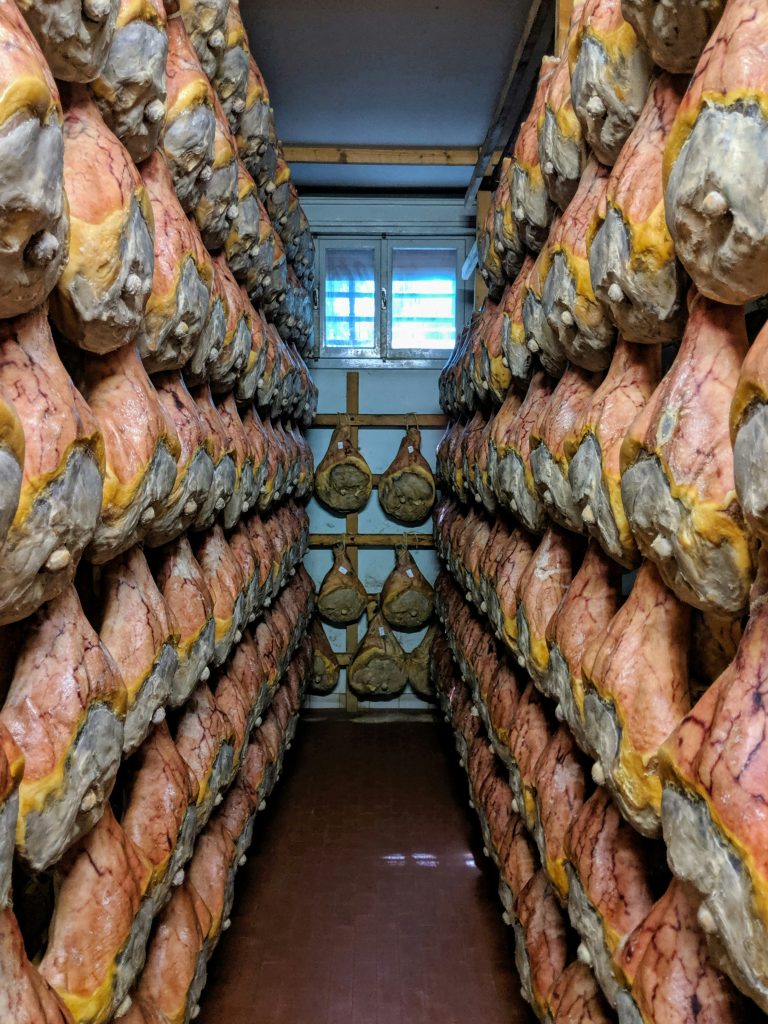
Jt for the eyes and the nose that helps you understand the depth of the aromas.
The Taste: How Do They Actually Compare?
This is the question everyone really wants to answer — and the honest answer is that both are exceptional, just different.
Jambon de Bayonne:
- Flavor: mild, delicate, slightly sweet with a subtle nuttiness. Texture: silky and tender, melts on the palate.
- Saltiness: lower than many cured hams — surprisingly gentle.
- Appearance: rosy, pink color, fine fat marbling, lean and elegant.
Prosciutto di Parma:
- Flavor: rich, sweet, and complex — with buttery, nutty notes from the long aging.
- Texture: smooth and velvety, with a slightly firmer bite than Bayonne.
- Saltiness: very low — one of the least salty cured hams in the world.
- Appearance: deep rose-pink color with a distinctive creamy white fat border.
How to Eat Each One
Jambon de Bayonne — the French way:
- Serve paper-thin, at room temperature.
- Classic pairing: fresh melon in summer, or on a baguette with salted butter.
- Perfect on a charcuterie board alongside cornichons and Dijon mustard.
- Wine pairing: a dry Basque white wine (Irouléguy) or a light Bordeaux rosé.
Prosciutto di Parma — the Italian way:
- Serve paper-thin, draped loosely on the plate.
- Classic pairing: fresh figs, ripe melon, or sliced ripe pears.
- Perfect wrapped around grissini (breadsticks) as an aperitivo.
- Wine pairing: a light Lambrusco or Prosecco from Emilia-Romagna.
Price: Which One is More Expensive?
Both hams are premium products — but there are differences. In general, Prosciutto di Parma tends to be slightly more expensive than Jambon de Bayonne, primarily because of its longer mandatory aging period (12 months minimum vs 7 months for Bayonne).
However, prices vary significantly depending on the producer, the aging duration, and where you buy. A standard supermarket for Bayonne ham and a basic Parma ham will be similarly priced. Premium aged versions of both can be considerably more expensive.
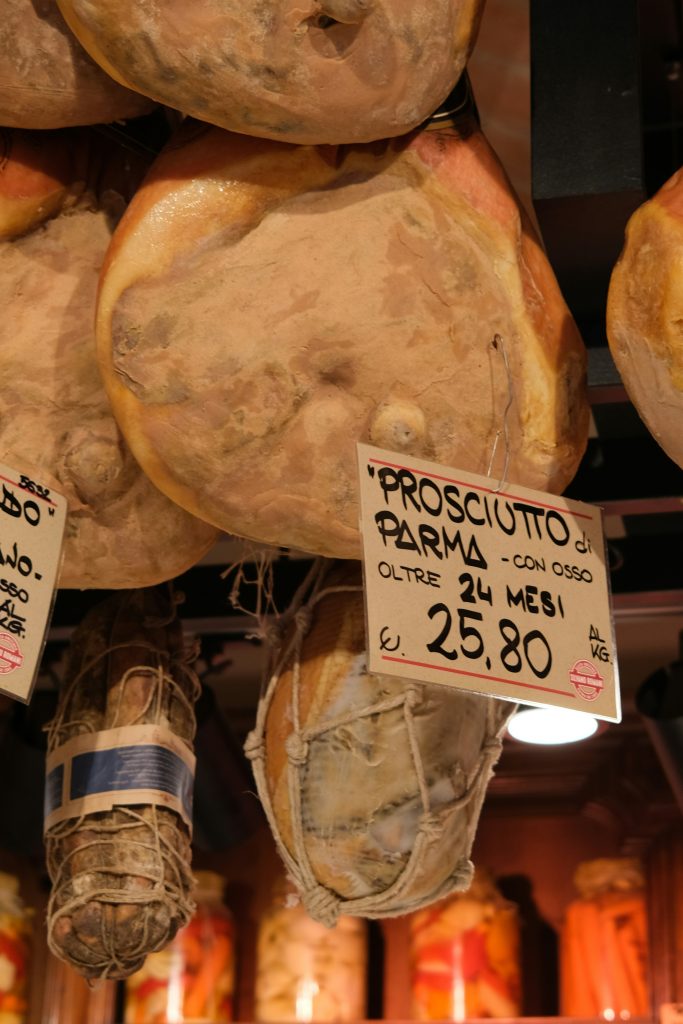
Price: Which One is More Expensive?
Both hams are premium products — but there are differences. In general, Prosciutto di Parma tends to be slightly more expensive than Jambon de Bayonne, primarily because of its longer mandatory aging period (12 months minimum vs 7 months for Bayonne).
However, prices vary significantly depending on the producer, the aging duration, and where you buy. A standard supermarket for Bayonne ham and a basic Parma ham will be similarly priced. Premium aged versions of both can be considerably more expensive.
The Verdict: Which Should You Choose?
The honest answer: both are world-class products, and the ‘better’ one depends entirely on your personal taste and how you plan to use it.
- Choose Jambon de Bayonne if: you prefer a milder, more delicate flavor; you’re building a French-themed charcuterie board; you want to explore authentic French charcuterie tradition.
- Choose Prosciutto di Parma if: you prefer a richer, sweeter, more complex flavor; you’re pairing with Italian ingredients; you want the longer-aged depth of flavor.
Pascal’s take: As a Frenchman from the Loire Valley, I have a natural fondness for Bayonne ham—it’s the quintessential French summer cured meat, especially paired with a few melon balls. But I’d never say no to a fine slice of aged Parma ham. Life is too short to choose just one
Frequently Asked Questions
Can I substitute one for the other in recipes?
Yes, in most recipes they are interchangeable. The flavor profile will differ slightly, but both work well in pasta dishes, wrapped around vegetables, in salads, or on boards. For strongly Italian dishes, Prosciutto di Parma is more authentic; for French dishes, Jambon de Bayonne fits better.
Is Jambon de Bayonne the same as Bayonne ham?
Yes — Jambon de Bayonne and Bayonne ham refer to the same product. ‘Jambon’ is simply the French word for ham.
Are there other French hams comparable to Prosciutto?
Yes! The Jambon Noir de Bigorre — made from the rare Gascon black pig in the Pyrenees — is often considered France’s finest dry-cured ham and is comparable in quality and prestige to the best aged Prosciutto. We’ll be covering it in a dedicated article on frenchcuredmeats.com.
Final Thoughts
Jambon de Bayonne and Prosciutto di Parma are both extraordinary products — living proof that simple ingredients, time, and artisan skills can produce something truly remarkable. Rather than choosing one over the other, the best approach is to appreciate each for what it is: a unique expression of its land, its climate, and its people.
Pingback: Jambon Noir de Bigorre: France's Rarest and Most Prestigious Ham - French Cured Meats