If I had to choose one product to represent the honest, generous, no-nonsense heart of French charcuterie, it would not be a prestigious AOP ham or an elaborate pâté en croûte. It would be the pâté de campagne the country pâté. Humble, unpretentious, deeply satisfying, and absolutely delicious.
Every French charcutier has their own recipe, passed down through generations. Every region has its variations. Every family has a preferred brand or producer. And yet the essence is always the same: coarsely ground pork, seasoned with salt, pepper, herbs, and a generous splash of Cognac, baked slowly until it fills the kitchen with one of the most comforting aromas in French cooking.
This is the pâté de campagne. Let me tell you everything about it.
What is Pâté de Campagne?
Pâté de campagne literally “country pâté” is a coarse-textured, rustic pâté made from a mixture of pork meat and pork liver, seasoned generously with salt, black pepper, herbs (typically thyme and bay leaf), and spices (usually quatre-épices), then baked in a terrine mold until fully cooked.
What distinguishes pâté de campagne from other pâtés is its deliberately coarse, rustic texture. Unlike a smooth liver mousse or a refined terrine de luxe, pâté de campagne is proudly imperfect with visible chunks of meat, a slightly grainy texture, and a bold, assertive flavour that demands good bread and a full-bodied red wine.
It is, in the best possible sense, a peasant food elevated to an art form.
A Brief History
The pâté de campagne has its roots in the ancient French tradition of the tue-cochon literally ‘pig killing day’ the annual autumn ritual on French farms when the family pig was slaughtered and every part of the animal transformed into charcuterie that would feed the family through the winter.
Nothing was wasted. The liver, the fat, the offcuts of meat that could not be cured whole — all of these became pâté. What began as an economic necessity became a culinary tradition, and what was a tradition became a cultural institution. Today, the pâté de campagne is as much a part of French national identity as the baguette or the beret.
What Goes Into a Pâté de Campagne?
The classic recipe is built on a handful of simple ingredients but the quality of each one matters enormously.
The Meat
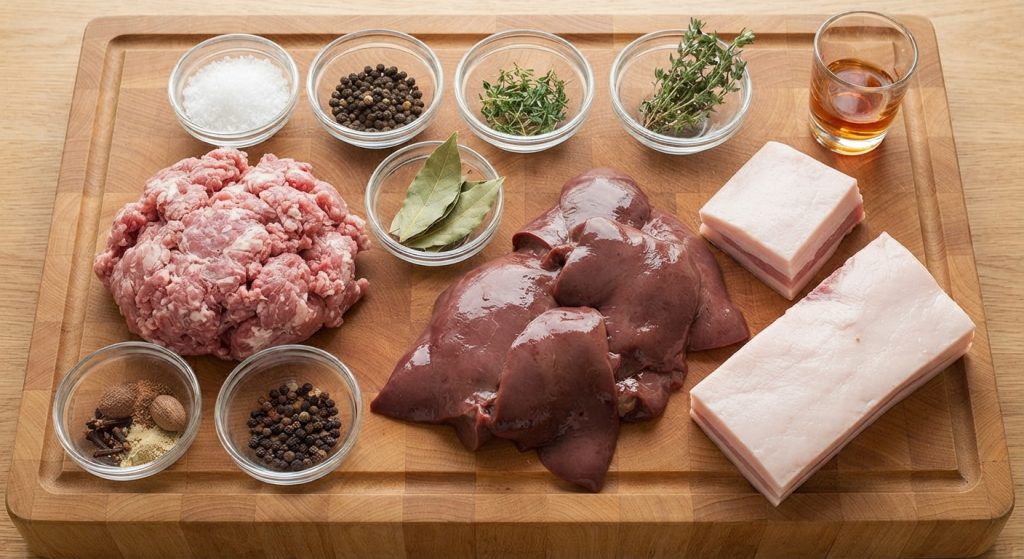
A traditional pâté de campagne uses a mixture of pork shoulder or neck (for the lean meat), pork back fat (for richness and moisture), and pork liver (for depth and binding). The classic ratio is roughly 50% lean pork, 25% fat, and 25% liver ,though every charcutier adjusts this to their taste. The liver is what gives pâté de campagne its characteristic flavour ,earthy, slightly bitter, deeply savoury. Too much and it dominates; too little and you lose the soul of the product.
The Texture
Unlike smooth pâtés, the meat for pâté de campagne is ground coarsely through a large-holed grinder plate. Some charcutiers cut a portion of the meat by hand rather than grinding it, to preserve larger, more visible pieces in the finished product. This deliberately rough texture is the signature of the campagne style.
The Seasonings
Salt and black pepper are the foundation. Quatre-épices the classic French blend of white pepper, nutmeg, cloves, and ginger is almost always present. Fresh thyme, bay leaf, and flat-leaf parsley are the standard herbs. A generous splash of Cognac, Armagnac, or a dry white wine is added to the farce before baking not just for flavour, but because the alcohol helps denature the proteins slightly and contributes to the texture.
The Barde : The Fat Lining
A traditional pâté de campagne is lined with thin sheets of barde strips of pork back fat or caul fat before the farce is added. The barde serves two purposes: it prevents the pâté from drying out during cooking, and it creates a protective layer that helps the pâté keep longer. When the pâté is sliced, the barde appears as a thin white border around the pink interior a visual marker of a traditionally made product.
Regional Variations
One of the great pleasures of pâté de campagne is its regional diversity. Every corner of France has its own version:
Bretagne :Pâté Breton
Made from Breton pork and seasoned with local herbs, the pâté breton tends to be slightly coarser and more heavily spiced than the national standard. Some versions include a touch of Breton cider or buckwheat flour — a nod to the region’s distinctly non-French culinary heritage.
Lorraine : Pâté Lorrain
The Lorrain version often incorporates veal alongside pork, giving it a slightly lighter, more delicate texture. It is also frequently made with Mirabelle plum brandy the golden spirit of Lorraine in place of Cognac, adding a fruity, floral note that is uniquely regional.
Périgord : Pâté Périgourdin
In the Périgord , the truffle and foie gras capital of France , even the humble pâté de campagne gets an upgrade. A slice of truffle or a tablespoon of foie gras in the centre of the terrine transforms it into something extraordinary. This is the luxury version of a democratic product , and it is wonderful.
Pâté de Foie de Porc : The Liver Forward Version
Some regions particularly in the south make a version with a higher proportion of liver, producing a darker, more intensely flavoured result. This is an acquired taste for some, but for those who love the earthy depth of liver, it is deeply satisfying.
How to Buy a Good Pâté de Campagne
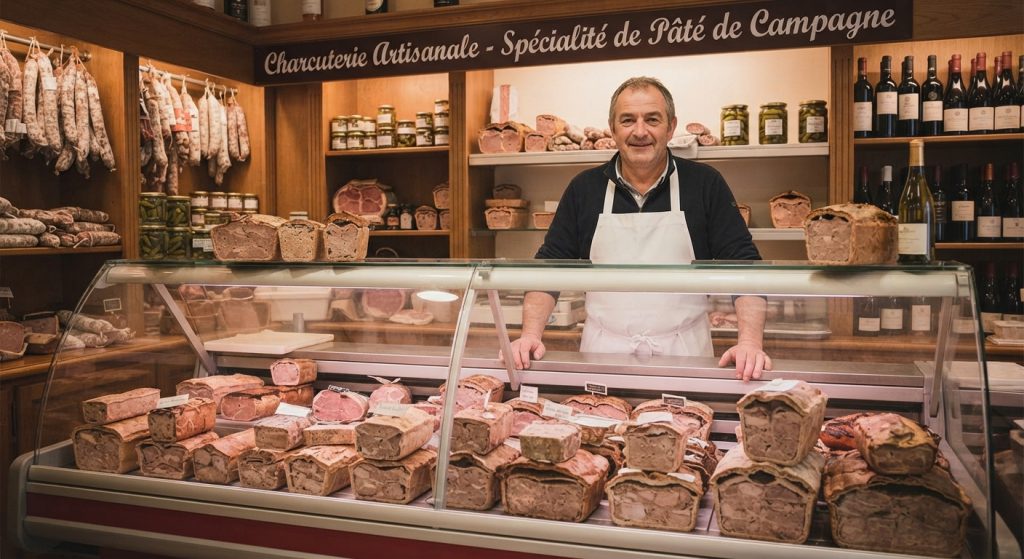
This is where I want to be direct with you: there is an enormous range of quality in pâté de campagne, from truly excellent artisan products to industrial approximations that share little beyond the name.
- Buy from a proper charcutier whenever possible the difference from a supermarket product is dramatic.
- Look for a Label Rouge certified pâté de campagne this guarantees superior taste quality verified by blind tasting panels.
- Check the ingredients list a genuine pâté de campagne should contain pork, pork liver, salt, pepper, herbs, and wine or Cognac. If you see more than 10 ingredients, particularly starch, soy protein, or excessive water, put it back.
- The colour matters a good pâté de campagne should be a warm pink-brown when sliced, with visible fat and herbs. A uniform grey-brown colour suggests over-processing or poor-quality liver.
- The smell test a good pâté de campagne smells of pork, herbs, and a hint of Cognac. Nothing else.
How to Serve Pâté de Campagne
- Always at room temperature take it out of the fridge 30 minutes before serving.
- Slice generously at least 1cm thick. A thin slice of pâté de campagne is a sad thing.
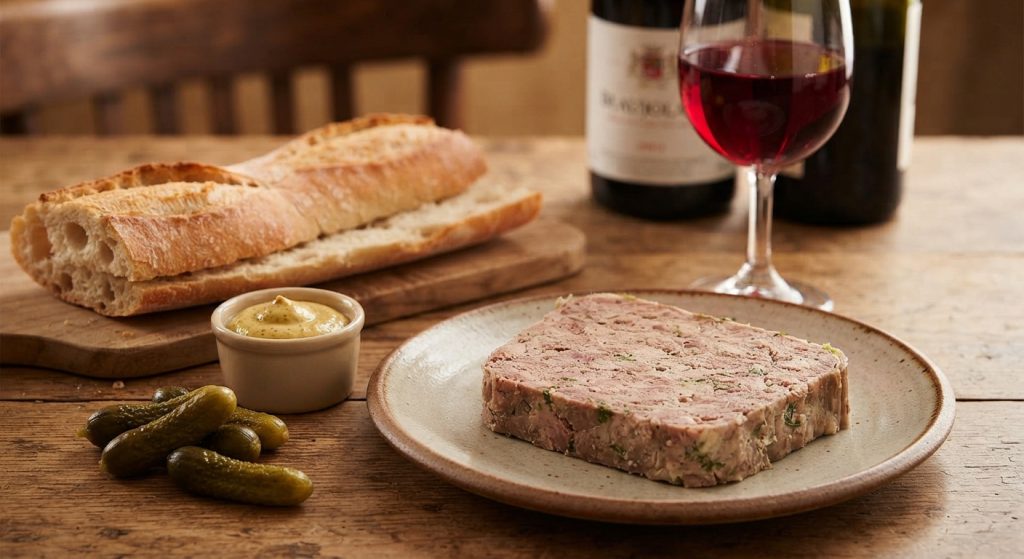
- Essential accompaniments: cornichons (non-negotiable), Dijon mustard (strongly recommended), fresh baguette or toasted country bread.
- Optional but wonderful: a few slices of radish, a small salad of bitter leaves, or a spoonful of onion confit alongside.
- Wine: a Beaujolais Villages, a light Côtes du Rhône, or a Loire red like Chinon or Bourgueil. Avoid heavy, tannic wines they overwhelm the delicate flavour of the pâté.
Frequently Asked Questions
Is pâté de campagne the same as country pâté?
Yes “country pâté” is simply the English translation of pâté de campagne. When you see ‘country pâté’ on a menu or in a shop outside France, it should refer to the same coarse-textured, pork and liver pâté though quality and authenticity vary widely.
How much liver should be in a pâté de campagne?
Opinions vary, but the classic range is between 15% and 30% liver of the total meat weight. Below 15%, you lose the characteristic earthy depth; above 30%, the liver flavour dominates and you move towards a pâté de foie rather than a campagne. My personal preference is around 20-25% enough liver to give depth and binding, not so much that it overwhelms the pork.
What wine pairs best with pâté de campagne?
Light to medium-bodied reds with enough acidity to cut through the richness: Beaujolais (particularly Morgon or Moulin-à-Vent), Chinon or Bourgueil from the Loire Valley, a light Côtes du Rhône, or a Pinot Noir from Alsace or Bourgogne. Avoid heavy, tannic reds they overpower the delicate balance of the pâté.
Final Thoughts
The pâté de campagne is proof that great food does not have to be complicated or expensive. It asks only for quality ingredients, honest seasoning, and a little patience. In return, it gives you one of the most deeply satisfying eating experiences in all of French charcuterie.
Find a good one ideally from a proper charcutier, ideally Label Rouge certified slice it thick, lay it on a warm baguette with a fat cornichon and a smear of Dijon, pour yourself a glass of Beaujolais, and take a moment to appreciate what French country cooking is all about. Simple, honest, and perfect.